
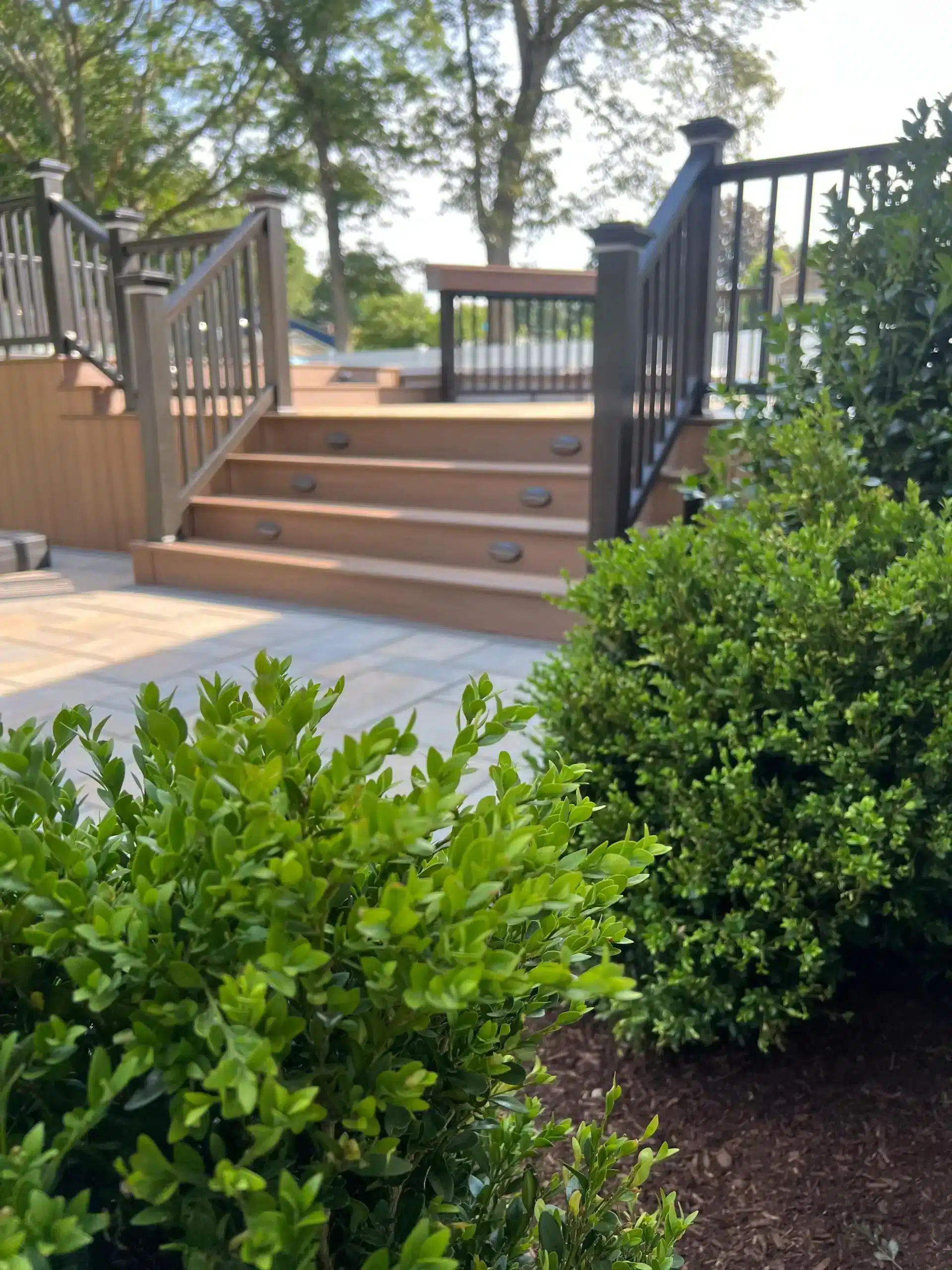
When planning your dream outdoor space, the battle between Trex and TimberTech often leaves homeowners scratching their heads. As materials go, composite decking has revolutionized how we think about outdoor living spaces—no more staining, sealing, or splinter worries. But which brand deserves your investment?
After building over 100 decks and working with countless homeowners across Southern Massachusetts, we’ve seen how material selection can make or break a project. Let’s dive deep into what sets Trex apart from TimberTech and help you make the right choice for your home.
TLDR: The Quick Comparison
Trex dominates the composite decking market for good reason—reliable performance, widespread availability, and solid warranties. Most composite deck builders stock Trex because homeowners know the name and trust the quality. Expect to pay premium prices, but you’re getting proven durability and consistent performance.
TimberTech brings innovation and premium aesthetics to the table with superior fade resistance and more realistic wood grain patterns. Their AZEK line pushes the boundaries of composite technology, though you’ll pay for that advancement. A great choice if you want cutting-edge materials and are willing to invest more upfront.
The winner? It depends on your priorities, budget, and how long you plan to stay in your home. Let’s break down the details so you can make an informed decision.
The Trex Story: Market Leader for a Reason

Trex practically invented the modern composite decking category, and its market dominance shows. Walk into any home improvement store, and you’ll find Trex front and center—there’s comfort in that ubiquity.
What Trex Does Best
- Proven Track Record: With millions of square feet installed across America, Trex has the largest sample size of real-world performance. When your composite deck builder recommends Trex, you’re getting materials with a proven track record of decades of success.
- Price Accessibility: Trex offers a range of product lines, from budget-friendly options to premium selections. The Select line provides solid performance without breaking the bank, while Transcend delivers premium aesthetics.
- Wide Availability: Finding Trex materials is never a challenge. Most suppliers stock multiple Trex lines, which keeps projects on schedule and replacement materials readily available in the future.
- Comprehensive Warranty Coverage: Trex backs its products with a 25-year warranty that covers structural integrity, staining, and fading. Their warranty terms are straightforward and well-established.
TimberTech: Innovation Meets Premium Performance
TimberTech positions itself as the innovation leader in composite decking, and their product lineup backs up that claim. If you want the latest technology and most realistic wood aesthetics, TimberTech deserves serious consideration.
TimberTech’s Competitive Advantages
- Superior Fade Resistance: TimberTech’s advanced color technology outperforms most competitors in UV protection. Colors stay vibrant longer, even in harsh sun exposure.
- Realistic Wood Aesthetics: TimberTech’s grain patterns and color variations create more authentic wood appearances. If you want a composite that looks like real lumber, TimberTech leads the pack.
- Advanced Technology: From their PRO line’s solid composite construction to AZEK’s PVC innovation, TimberTech pushes material science forward.
- Premium Warranty Terms: TimberTech offers some of the industry’s most comprehensive warranties, with coverage up to 50 years on select products.
Head-to-Head: Performance Comparison
| Feature | Trex | TimberTech | Winner |
| Durability | 25-30 year lifespan, proven track record | 30+ year lifespan, superior fade resistance | Tie |
| Aesthetics | Good grain patterns, solid color selection | Realistic wood appearance, advanced color tech | TimberTech |
| Price Range | $8-15 per sq ft (Select to Transcend) | $10-20+ per sq ft (EDGE to AZEK) | Trex |
| Warranty | 25 years structural, stain & fade | Up to 50 years on premium lines | TimberTech |
| Availability | Widely stocked, easy to source | Good availability, premium focus | Trex |
| Heat Resistance | Standard composite heat absorption | Better heat reflection on light colors | TimberTech |
Product Line Comparison
| Product Line | Price Range | Best For | Key Features |
| Trex Select | $8-10/sq ft | Budget projects | Basic composite performance, limited colors |
| Trex Enhance | $10-12/sq ft | Mid-range projects | Better aesthetics, grooved backing |
| Trex Transcend | $12-15/sq ft | Premium residential | Advanced protection, realistic grain |
| TimberTech EDGE | $10-13/sq ft | Value + performance | Capped composite, fade protection |
| TimberTech PRO | $13-18/sq ft | High-end residential | Solid composite, superior aesthetics |
| TimberTech AZEK | $18-25/sq ft | Ultimate performance | PVC construction, lifetime moisture warranty |
Real-World Considerations for Your Project

Climate Impact on Material Choice
- Hot, Sunny Climates: TimberTech’s superior fade resistance makes it a worthwhile investment in areas with intense sun exposure.
- High-Moisture Areas: Pool decks and coastal locations benefit from TimberTech’s advanced moisture protection, especially its AZEK PVC line.
- Moderate Climates: Trex performs excellently in typical weather conditions and offers better value for most homeowners.
Installation Factors
- Professional Installation: Any quality composite deck builder can work with either material successfully. The installation process is nearly identical.
- DIY Considerations: Trex’s wider availability makes it easier for DIY projects, though we recommend professional installation for optimal results and warranty protection.
Long-Term Maintenance
Neither material requires staining or sealing; however, regular cleaning is necessary to maintain its appearance. TimberTech’s fade resistance means colors stay vibrant longer with basic maintenance.
Making Your Decision: Key Questions to Ask
Before committing to either material, consider your specific situation:
- Budget Range: Trex offers more affordable entry points starting at $8/sq ft, while TimberTech focuses on premium performance with prices starting around $10/sq ft.
- Timeline in Home: TimberTech’s longer warranties (up to 50 years) and superior fade resistance provide better long-term value if you plan to stay 15+ years.
- Visual Priorities: TimberTech creates more realistic wood appearances with advanced grain patterns and color technology.
- Local Climate: Harsh sun exposure favors TimberTech’s UV protection, while high moisture areas benefit from their AZEK PVC line.
- Material Availability: Trex’s widespread availability simplifies projects and future repairs or additions.
Professional Installation: The Key to Success
Material quality means nothing without proper installation. Poor workmanship can ruin premium materials, while skilled craftsmanship ensures that any quality composite decking performs exceptionally.
What to Look For in Your Composite Deck Builder
- Proven Experience: Ask to see examples of 5+ year old installations with your selected material
- Proper Licensing: Verify current licenses and insurance coverage for your protection
- Comprehensive Warranties: Look for builders who warranty their workmanship separately from material warranties
- Code Compliance: Professional permit handling and inspection coordination
- Clear Communication: Detailed project timelines and regular progress updates
Red Flags to Avoid
- Unusually Low Bids: Quality installation requires skilled labor and proper materials—extremely low prices often indicate shortcuts.
- Cash-Only Payments: Reputable contractors accept multiple payment methods and provide detailed contracts.
- Door-to-Door Sales: Professional deck builders rely on referrals and reputation, not high-pressure sales tactics.
- No Local References: Any established contractor should provide recent local project examples.
The Bottom Line: Trex vs TimberTech
- Choose Trex if: You want proven performance, multiple price points, wide availability, and solid value. Trex delivers reliable composite decking without unnecessary complications.
- Choose TimberTech if: You prioritize premium aesthetics, superior fade resistance, advanced technology, and longer warranty coverage. You’re willing to invest more upfront for enhanced performance.
- Either way: Work with an experienced composite deck builder who understands your specific needs and local conditions. Material quality means nothing without proper installation and project management.
Frequently Asked Questions
1. What’s the actual price difference between Trex and TimberTech installed?
Material costs: Trex Select ($8-10/sq ft) to Transcend ($12-15/sq ft). TimberTech EDGE ($10-13/sq ft) to AZEK ($18-25/sq ft). Professional installation: $8-$ 12/sq ft, regardless of material. Total project cost for 300 sq ft deck: Trex $4,800-8,100, TimberTech $5,400-11,100.
2. How long do these decks actually last in New England weather?
Trex decks maintain structural integrity for 25-30 years with proper installation. TimberTech often exceeds 30 years due to superior fade resistance. Surface scratches and minor color changes appear after 15-20 years on both materials. Neither will rot, warp, or splinter like wood.
3. Can I save money by installing composite decking myself?
DIY installation voids most manufacturer warranties and creates liability issues. Professional installation costs $8-$ 12/sq ft, but includes a structural warranty, code compliance, and permit handling. DIY mistakes often cost more to fix than professional installation would have cost initially.
4. Do these materials really stay cooler than wood decking?
No composite material stays cooler than wood in direct sunlight. Expect surface temperatures of 120-140°F in summer sun. TimberTech’s lighter colors and heat-reflection technology run 10-15 degrees cooler than darker Trex options. Consider light colors or shade structures for comfort.
5. What’s the real maintenance difference compared to wood?
Wood decks require annual staining/sealing ($2-4/sq ft) plus regular repairs. Composite needs only soap-and-water cleaning twice yearly (2-3 hours total). No staining, sealing, or board replacement for 25+ years. Composite saves 15-20 hours annually, plus material costs.
6. Which material handles snow, ice, and freeze-thaw cycles better?
TimberTech’s advanced capping technology offers slightly improved freeze-thaw performance, but properly installed Trex handles New England winters exceptionally well. Neither material cracks nor splits from temperature changes.
Professional Installation Makes the Difference
At Acadia Outdoors, we’ve worked with numerous composite decking materials across Southern Massachusetts, Cape Cod, the South Shore, and Northern Rhode Island. Our experience with over 100 deck installations has shown us that successful projects depend on three key factors: high-quality materials, skilled craftsmanship, and effective communication.
We’re licensed and insured (MA License #CS-114500) and work with top-tier materials, including TimberTech, Deckorators, and MoistureShield. Every project includes our craftsmanship warranty alongside manufacturer guarantees that protect your investment for decades.
Whether you’re leaning toward Trex or TimberTech, our team can help you evaluate options based on your specific needs, budget, and local conditions.
Ready to explore your options? We’d love to discuss your vision and show you exactly what’s possible for your outdoor space!

